

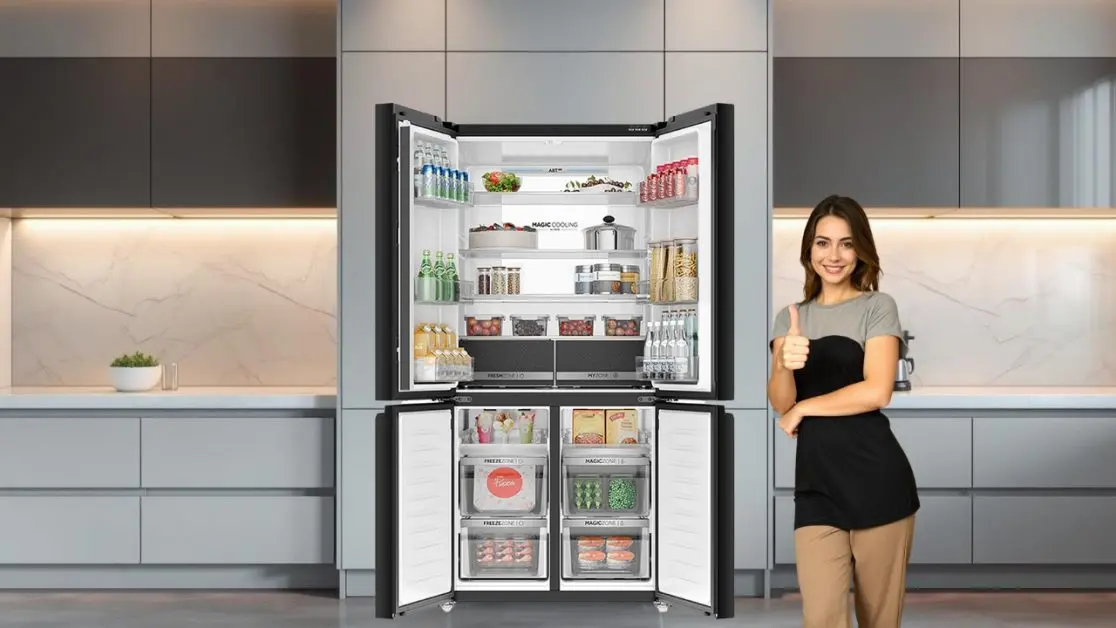
A refrigerator works around the clock for many years, and not only food storage quality but also electricity consumption and compressor service life depend on its proper setup. Modern models have complex temperature and humidity management systems that reveal their potential only with competent configuration according to the manufacturer’s manual. This sophistication is often wasted when users rely on default settings without optimization.
Optimal Temperature Settings
The optimal temperature of the refrigerator compartment is +2 to +5 degrees Celsius, and the freezer compartment is -18 degrees. These parameters aren’t accidental: they ensure maximum food preservation with minimum energy consumption. Lower temperatures don’t improve storage quality but significantly increase electricity consumption. A manual for a specific model may indicate features, for example, recommendations for tropical climates or increased humidity modes for fruits and vegetables that would surprise many owners.
Different refrigerator zones have different temperature conditions, even if this isn’t visually obvious. Upper shelves are usually warmer than lower ones, the back wall is colder than the front part. Special compartments, such as freshness zones or zero zones, maintain temperatures around zero for maximum preservation of meat and fish. Browse this site for storage zone schemes for specific models. Proper product placement in these zones increases their freshness period by several days compared to chaotic arrangement, which matters significantly for weekly grocery planning and reducing food waste.
Storage Zones and Their Features
The No Frost system eliminates the need for defrosting the refrigerator but has its operating features. The air in such a chamber is drier, so open products lose moisture faster. The manual recommends using containers or film to prevent weathering of foods. Models with drip systems require periodic checking of the drainage opening, which can clog and lead to water appearing on the chamber bottom, a problem easily prevented with regular attention.
Refrigerator energy consumption depends on many factors, many controlled by the user. Ambient air temperature, degree of chamber loading, frequency of door opening, correctness of appliance installation — all this affects electricity bills. The manual usually indicates the optimal distance to the wall and other appliances for normal air circulation around the compressor. Following these recommendations extends refrigerator service life by years and saves tangible amounts on electricity bills over time.