

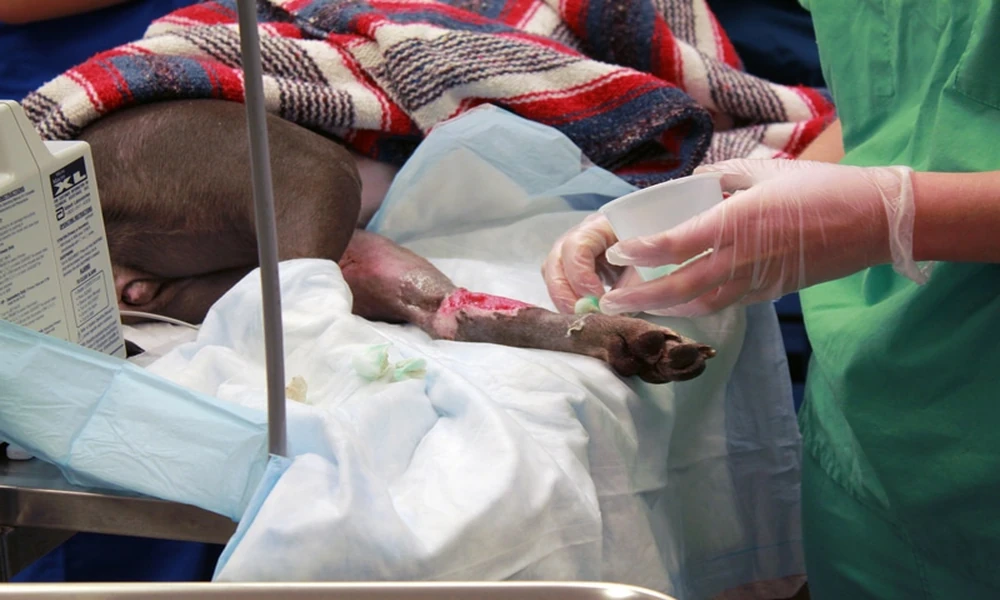
You see a cut, a torn paw pad, or a deeper laceration on your pet and your mind goes straight to bandages. That makes sense. Bandages are familiar, and they feel like action. The hard part is that many wounds need more than a wrap to heal well, which is why visiting an animal hospital in Corpus Christi can be so important. They need cleaning, protection, drainage control, and close monitoring so a small injury does not turn into infection, delayed healing, or a much larger bill.
That is why 6 wound care tools veterinary hospitals use beyond bandages matters to pet owners. An animal hospital does not rely on one fix. Veterinary teams use a set of tools, each with a different job, to clean damaged tissue, lower bacteria, manage moisture, and support healing from the inside out. If you have ever wondered why your pet came home with a cone, a drain, or a special dressing instead of a simple wrap, this is usually the reason.
Veterinary wound care tools do different jobs than a bandage can
A bandage can protect a wound from dirt and licking, but it cannot do everything. If debris stays trapped in the tissue, the wound can seal over too fast on the surface while infection builds underneath. If the area stays too wet, skin breaks down. If it gets too dry, new tissue struggles to form. Good wound care is a balance, and that balance changes with the type of injury.
Basic wound treatment starts with cleaning and assessment. The University of Minnesota’s wound treatment guide outlines the kind of careful lavage and tissue handling that helps reduce contamination without causing more damage. That is the part many people never see. Before a dressing goes on, the wound often needs skilled preparation.
One of the first tools is wound lavage equipment, usually sterile saline delivered with enough pressure to flush out dirt and bacteria. A dog that skidded across gravel or a barn cat with a puncture wound may have tiny particles deep in the tissue. If those stay in place, healing slows and pain often gets worse.
Another common tool is antiseptic solution chosen for the wound, not just whatever is on hand. Some cleaners are too harsh for exposed tissue. Veterinary teams match the product to the wound so they lower bacteria without damaging healthy cells that are trying to repair the area.
Debridement tools matter too. That can mean surgical instruments used to remove dead tissue, or dressings designed to help unhealthy tissue lift away over time. Dead tissue acts like a barrier. It blocks healing and gives bacteria a place to grow. This is one reason advanced wound care in veterinary hospitals often looks more involved than owners expect.
Specialized dressings and drains support healing under the surface
Not all dressings are simple gauze. Veterinary hospitals use foam dressings, nonadherent pads, hydrogel products, and absorbent materials that manage fluid while protecting fragile new tissue. The right dressing keeps the wound environment balanced. Too much fluid causes skin damage. Too little can stall repair.
Drains are another tool that can look alarming at first. If your pet has swelling, a bite wound, or a pocket where fluid can collect, a drain gives that fluid a path out of the body. Without it, pressure and bacteria can build up under the skin. That can turn one procedure into repeat visits, more discomfort, and a slower recovery.
An Elizabethan collar, recovery suit, or other protective barrier also counts as wound care equipment. Pets lick because wounds bother them. You do not need to be told how fast a determined dog can undo hours of treatment. Preventing self trauma is often the difference between steady healing and a wound that keeps reopening.
For larger injuries, negative pressure wound therapy may be considered. Research updates from veterinary medicine programs, including work highlighted by Ohio State’s veterinary news, reflect how wound management keeps evolving beyond traditional wraps alone. These systems help remove fluid, improve circulation in the area, and encourage tissue growth in selected cases.
Equine and companion animal injuries often need faster professional care
Timing changes the outcome. A fresh wound has a better chance of being cleaned well and closed or managed correctly before contamination takes over. This is especially true with larger animals and outdoor injuries. The Virginia Tech guidance on equine lacerations shows how quickly location, depth, and contamination level can change the plan. The same principle applies to dogs and cats. A wound near a joint, eye, paw, or chest is not something to watch for a day or two and hope for the best.
Veterinary wound management tools are not about doing more for the sake of doing more. They are about matching the treatment to the actual risk. That can save tissue, lower pain, and reduce the chance that a wound becomes chronic.
Home bandaging and animal hospital wound care carry different risks
| Situation | Home Care Approach | Animal Hospital Approach | Main Risk if Delayed |
|---|---|---|---|
| Minor superficial scrape | Gentle cleaning, prevent licking, monitor closely | Exam if redness, swelling, discharge, or pain develops | Hidden infection or excessive licking |
| Deep cut or puncture | Basic first aid only while arranging care | Lavage, debridement, possible closure, drain, pain control | Trapped bacteria, abscess, tissue death |
| Bite wound | Often looks small on the surface | Exploration, flushing, antibiotics when indicated, drainage management | Severe infection under intact skin |
| Paw pad or joint area wound | Hard to keep clean and still | Special dressing, immobilization support, repeat checks | Reopening, delayed healing, loss of function |
Three smart steps you can take right away
1. Look at location and depth, not just blood. A wound that is small but deep, dirty, or near a joint can be more serious than a larger surface scrape. If you can see fat, muscle, a gap in the skin, or ongoing swelling, your pet needs professional care.
2. Stop licking and protect the area. Use a cone or recovery collar if you have one. Keep the wound as clean as you can without scrubbing it. Do not apply random ointments or harsh disinfectants meant for household use.
3. Call an animal hospital early. Wounds age fast. Early treatment gives the team more options, and it often means a smoother recovery. If your pet seems painful, lethargic, or feverish, move that call up the list.
Prompt wound care gives your pet a better chance to heal cleanly
You are not overreacting when a wound worries you. Most owners wait because they hope it is simple, and sometimes it is. The trouble starts when a wound only looks simple from the outside. The tools used in an animal hospital go far beyond bandages because healing is more than covering skin. It is cleaning, protecting, draining, and creating the right conditions for tissue to repair.
If your pet has a wound that is deep, contaminated, swollen, or not improving, contact an animal hospital and have it assessed as soon as possible.