

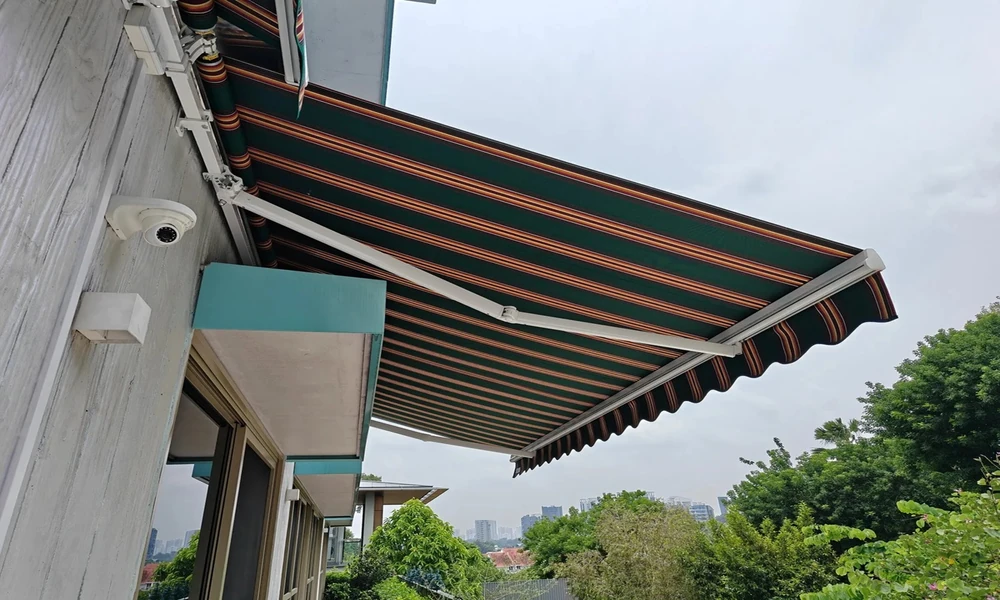
Two quotations for what appears to be the same awning can differ by a factor of three, and homeowners reasonably conclude that someone is overcharging. Usually nobody is. The variables that drive retractable awning singapore price differences are mostly invisible in a photograph: the arm mechanism, the fabric grade, the fixing detail, the motor, and whether the quotation includes the things the cheaper one quietly left out.
Size Drives Everything Else
Cost rises with width and, more sharply, with projection. A longer projection increases the leverage on the arms and the uplift on the fixings, so the frame, the arm assembly and the anchoring all have to be heavier. Doubling the projection does considerably more than double the structural demand. This is why a modest awning over a doorway costs a fraction of one covering a full terrace, even though the fabric area difference alone would not suggest it.
The Arm Mechanism Is the Expensive Part
Folding arms are the engineering core of a retractable system. Quality units use forged or heavy extruded components with stainless steel internal cables or chains, tensioned so the fabric stays flat across the span. Budget units use lighter castings and simpler linkages that develop play within a couple of years, letting the fabric sag and pool water. This single component accounts for much of the price gap between quotations, and it is the one you cannot inspect from the ground once installed.
Fabric Grade
Solution-dyed acrylic costs more than piece-dyed or printed fabric because the pigment is locked into the fibre, and under sustained tropical UV that shows as a visible difference in colour retention within the first year. PVC-coated polyester is waterproof rather than water-resistant and is priced differently again. Mould-resistant treatment matters in this humidity and is not universal at the lower end. Fabric is also the element you will replace first, so the specification is worth recording for later.
Cassette or Open
An open system leaves the fabric and arms exposed when retracted. A semi-cassette shelters the roll and the top of the arms. A full cassette encloses everything when closed. The full cassette costs the most and extends the life of the fabric and mechanism substantially by keeping dust, rain and sun off them between uses. In this climate it is generally the better value over ten years, even though it is the more expensive line on the quotation.
Motorisation and Controls
A manual crank is the cheapest option and, in practice, the one that leads to an awning nobody bothers to extend. A tubular motor with remote control adds meaningfully to the price and is what makes the awning part of daily life. A wind sensor adds a little more and is the cheapest insurance available on the whole installation. Sun sensors and home automation integration are conveniences priced accordingly. Motor brand and warranty vary widely and are worth asking about specifically.
Installation Complexity
Two identical awnings can cost very differently to install. Ground floor work off a stepladder is straightforward. High-level work needing scaffolding or a lift, a difficult substrate requiring chemical anchors or a steel backing plate, or restricted access through a building all add labour and equipment. Contractors who quote without a site visit are estimating this, which is why their prices change on the day. A quotation following a proper survey is more likely to hold.
Frame Material and Finish
The frame is a smaller share of the cost than the mechanism but it determines how the installation looks after five years. Extruded aluminium with a quality powder-coated or anodised finish resists the humidity and, near the coast, the salt. Thinner extrusions and cheaper coatings chalk and fade, and where steel components are used without proper galvanising they produce rust streaks down the wall below, which is both unsightly and difficult to remove from a painted facade. Ask what the frame sections are made of and what finish is applied, since this rarely appears on a quotation unless requested.
What Is Included and What Is Not
Read what each quotation covers: delivery, installation, electrical connection for a motorised unit, making good around the fixings, removal of an existing awning, disposal of packaging, and approval submissions. Electrical work in particular is often excluded and requires a licensed electrician, which is a separate cost. Two quotations that differ by fifteen percent frequently turn out to be identical once the excluded items are added back to the cheaper one.
Warranty and Aftercare
Longer warranties on the frame, mechanism and motor generally indicate a supplier confident in the components and intending to remain in business. Ask what the workmanship warranty covers, particularly the fixings, and what servicing is recommended and at what cost. A firm offering annual servicing and stocking replacement fabric for your model is worth a premium, since the alternative in five years is replacing the whole assembly because a cover cannot be matched. Get the retractable awning cost breakdown in writing so these elements are visible rather than bundled.
Comparing Sensibly
Ask every supplier for the same itemised format: system and model, fabric type, cassette configuration, motor and controls, fixing method, dimensions, inclusions, exclusions and warranties by element. Then compare like for like. The cheapest quotation is often a lighter mechanism with piece-dyed fabric, an open frame and no wind sensor, which is a genuine saving in year one and a replacement in year five. Understood properly, retractable awning singapore price differences almost always resolve into specific components you can point at.