

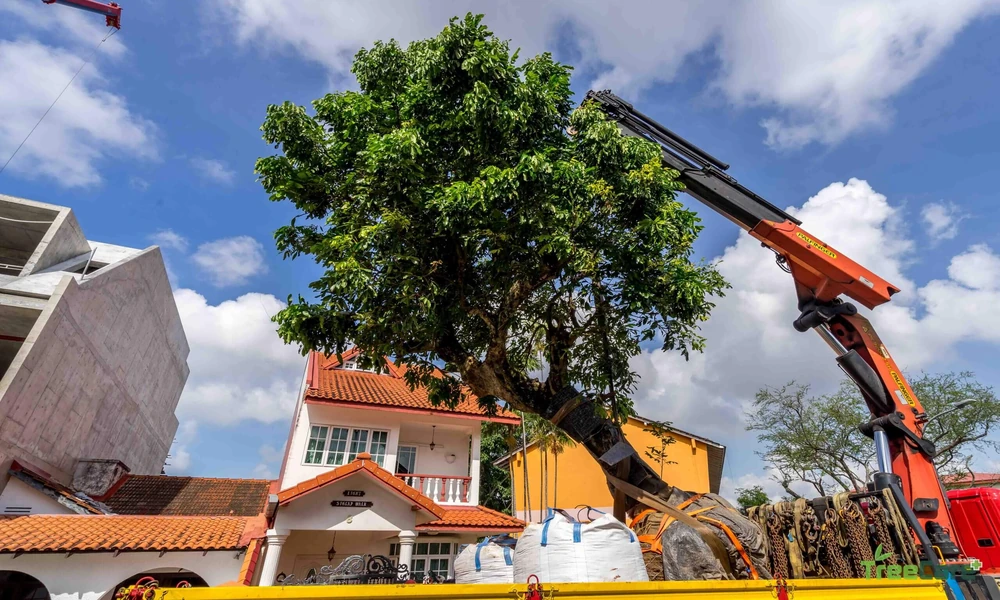
In Singapore, cutting a tree without the correct permit can result in a fine of up to fifty thousand dollars. That is not a rumour. It is written into the Parks and Trees Act, and the National Parks Board enforces it. For property owners who assume that a tree on their land is theirs to remove without restriction, that assumption carries serious financial consequences. Professional tree cutting services handle not just the physical removal but the regulatory compliance that must come first.
Singapore’s urban greenery is actively managed. The government has planted millions of trees across the island and takes their preservation seriously. Not every tree can or should be removed, and the process for determining which ones can begins well before a chainsaw appears. A qualified tree removal specialist understands this regulatory environment and navigates it on behalf of the client.
The Legal Framework for Tree Removal
The Parks and Trees Act 2026 governs the felling, pruning, and removal of trees in Singapore. Under this legislation, trees above a certain girth measurement within gazetted areas are protected and cannot be removed without written approval from the Commissioner of Parks and Recreation.
For landowners, the process begins with assessing whether the tree in question is protected. This depends on its species, girth, location, and whether the land it sits on is gazetted under the relevant provisions. Applications for removal must be submitted with supporting documentation, and approval is not guaranteed.
Tree cutting companies that work regularly in Singapore understand which trees are likely to receive approval for removal and which are not. They can also advise on alternatives to full removal, including crown reduction and root barrier installation, that may address the client’s underlying concern without requiring approval for felling.
Safety Is Not Secondary
Beyond the legal dimension, tree removal in a built environment involves genuine physical risk. A mature tree in a Singapore landed property typically grows close to structures, power lines, boundary walls, and neighbouring properties. A poorly planned removal can bring large sections of canopy down in uncontrolled ways, with consequences that range from property damage to serious injury.
Professional tree cutting uses rigging equipment, aerial work platforms, and section-by-section dismantling techniques to control where material falls. Climbers work in the canopy to remove branches progressively, reducing the tree to a manageable stump rather than felling it as a single unit. This approach is standard for urban environments where space is constrained.
What the Removal Process Involves
A professional tree removal engagement begins with a site assessment. The arborist examines the tree’s condition, its proximity to structures and services, and the access available for equipment. This assessment informs the removal methodology and the equipment required.
For trees in confined spaces, manual climbing with rigging is the standard approach. Material is lowered in sections using ropes and pulleys to avoid impact on structures below. For trees in open spaces with sufficient clearance, mechanical assistance using a boom lift or crane may allow faster removal.
Stump grinding follows removal. The stump is reduced below ground level using a mechanical grinder, allowing the soil to be restored for planting or paving. All chipped and green waste is cleared from site. The client receives a clean site ready for the next phase of their landscaping plan.
Choosing a Qualified Tree Removal Company
Not all tree removal companies operate to the same standard. A qualified provider will assess the regulatory status of the tree before quoting for removal. They will carry public liability insurance that covers work at height and adjacent property damage. Their team will include trained climbers and arborists, not just labourers with chainsaws.
Questions to ask when engaging a provider include: Do they handle permit applications on behalf of the client? Are their climbers trained and certified? What does their insurance cover? Do they provide a written scope of work before starting?
Tree felling services from a qualified company come with the regulatory knowledge and physical competence to complete the job without exposing the client to the fifty thousand dollar fine, the liability of an unsafe removal, or the cost of repairing avoidable property damage.
For property owners across Singapore who need a tree removed safely, legally, and efficiently, working with experienced tree cutting professionals is the approach that protects both the property and the person responsible for it.