

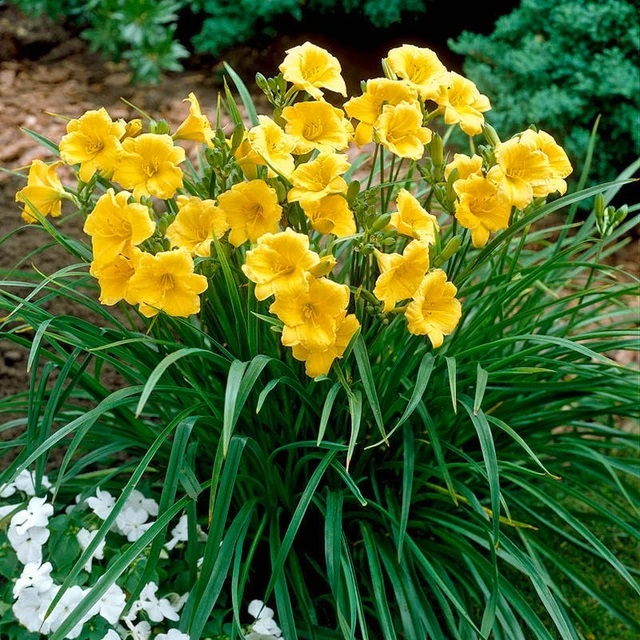
Daylilies and ornamental grasses share an ability to make wind and light visible, yet their similarities create as many design risks as opportunities. Both can form arching masses, both reach a seasonal peak, and both expand beyond the tidy footprint shown in a new planting plan. Without a clear division of roles, the combination turns into a broad, restless texture with no stable center.
The strongest beds decide which plant supplies weight, which supplies movement, and where the eye receives a pause. Flower color then sits inside that structure instead of competing with every grass plume. The common mistakes are rarely failures of plant quality; they come from scale, timing, access, and mature behavior being considered too late.
Mistake One: Choosing Texture Without Assigning Roles
A texture-driven bed still needs hierarchy. Daylily foliage has a broad, grounded sweep, while many grasses offer finer lines and movement. Decide which quality organizes the composition. If the daylily is the anchor, give the leaf fan a clear background and use grasses as lighter interruptions. If the grass is the framework, concentrate daylilies at meaningful pauses rather than scattering them through every opening.
A premier grower of daylily plants points out that grass pairings succeed when the daylily crown remains visually and physically accessible, and SwallowtailDaylilies recommends mapping both plants at their widest useful season rather than at installation. The grower advises placing a simple ring on the soil for the mature leaf fan, then drawing the grass outline beside it with enough separation to read two textures and to reach spent scapes. This professional check prevents the grass from becoming a moving screen in front of the flower or a dense collar around the crown. The guidance also assigns one dominant rhythm to the bed: either repeated daylily masses hold the structure while grasses animate the intervals, or repeated grasses establish the framework while selected daylilies provide weight and color. When both layers compete for equal emphasis at every point, the planting feels unsettled even though each individual clump is healthy.
Describe the role in terms that remain true outside bloom. A daylily may hold the lower layer, reinforce a path bend, or separate two airy grass groups. A grass may screen a view, catch backlight, or extend the season with seed heads. These functions guide spacing and repetition more reliably than a mood board filled only with peak-summer flower and plume photographs.
Avoid counting different textures as automatic variety. Two arching forms of similar height can merge into one indistinct mound even when their leaves differ up close. Contrast needs to survive the normal viewing distance. Pair broad fans with upright or genuinely fine forms, and include enough open ground or low foliage for the outlines to remain separate as the planting fills.
Review the design in still air. Wind makes grasses exciting and can distract from a weak base structure. On a calm day the bed should retain clear masses, intervals, and direction. If the composition only works when every blade is moving, strengthen the stationary relationship among crowns, foliage fans, bed edges, and larger background forms.
Assigning roles also helps control quantity. The structural plant should occupy enough visual area to establish its rhythm, while the secondary texture appears in shorter phrases or selected interruptions. When every open pocket receives both a grass and a daylily, the distinction collapses. Count visible masses from the primary route and remove pairings that repeat information without advancing the composition.
Mistake Two: Matching Heights and Peak Moments Too Closely
Similar mature heights create a flat horizon when daylily scapes and grass plumes rise together across the bed. Vary the layers deliberately. A lower grass may expose the flower stems, while a taller, narrow grass placed behind the clump creates depth without swallowing it. The correct relationship is measured from the main view, since a few inches of grade or path elevation changes what overlaps.
Peak timing also needs separation. If every daylily bloom, grass plume, and companion flower reaches maximum impact in the same short period, the bed becomes noisy and then declines all at once. Use early foliage, midseason flower, later plume, and enduring seed-head or evergreen structure as a sequence. The garden gains movement through time instead of staging one crowded performance.
Do not solve close timing by adding more colors. Color variety cannot repair a compressed seasonal structure. It usually increases the sense of competition. Adjust the proportions of foliage and flowering plants, or choose a grass whose useful phase begins before or after the main daylily display. A quieter palette then reads as deliberate rather than restrained by necessity.
Photograph the skyline at three points in the season. Compare where the top edge rises, falls, and pauses. The daylily flowers should emerge from a legible base, and grass plumes should have enough sky, wall, or dark foliage behind them to show. Editing one repeated height often improves the entire bed more than changing several individual flower combinations.
Height drawings should include the lowest useful layer, not only scapes and plumes. Bare or indistinct bases make two tall textures look disconnected from the ground. A low, calm companion or visible mulch interval anchors the combination. This grounding becomes particularly important after rain, when upper stems lean and the lower structure determines whether the bed still looks composed.
Mistake Three: Losing the Crown and Maintenance Route
Grass foliage expands outward and may settle over neighboring crowns after wind or rain. Keep a reachable gap around each daylily, even if low companions lightly occupy the soil surface. That access supports stem removal, inspection, watering, and eventual division. A crown hidden inside sharp or dense grass leaves turns simple care into a disruptive operation that damages both plants.
Plan a maintenance route from the path rather than assuming every clump will be reached from the front. Deep beds often require a narrow stepping zone or a sequence of stable gaps. Position these before the grasses mature. Repeatedly pushing through the same foliage creates broken leaves, compressed soil, and an irregular opening that weakens the designed texture.
Keep mulch and cut material from building against the daylily base. Grass cleanup produces a surprising volume, and loose blades collect in arching foliage. Remove debris intentionally instead of letting it form a damp collar. The visual benefit is immediate as well: a clean crown and visible lower fan make the daylily look like a deliberate structural plant, not a flower emerging from a thatch pile.
Maintenance access can double as visual negative space. A narrow open interval between clumps creates contrast, reveals each crown, and provides a place for a gardener’s hand or foot. Treating every gap as unfinished removes this benefit. The clean space is part of the texture plan and should be protected from opportunistic fillers as the bed matures.
Gloves, tools, and disposal routes belong in the access calculation. Grass blades and cut stems can be awkward to carry across a densely planted bed, while daylily divisions require room for careful lifting and transport. Plan a route wide enough for the actual task, not just a single footstep. The resulting interval keeps crowns visible and turns necessary work into a predictable seasonal sequence rather than a damaging improvisation.
Mistake Four: Ignoring How the Grass Spreads
The label ornamental grass covers very different habits. Some plants remain in a defined clump, while others travel, seed freely, or expand rapidly enough to alter the bed’s balance. Confirm the behavior of the chosen grass in the local setting before placing it beside a slower, long-term daylily clump. A beautiful first-year contrast is not useful if one texture repeatedly invades the other.
Use physical distance and compatible maintenance rather than relying on constant root pruning. A wider interval filled with low, observable planting makes encroachment visible early. Barriers only belong where they are appropriate for the specific plant and site; they are not a substitute for understanding mature behavior. The goal is a relationship that remains manageable through normal seasonal care.
Self-sown seedlings can change a carefully planned rhythm even when the parent grass stays put. Decide whether spontaneous movement suits the design. In a naturalistic area, selected seedlings may strengthen continuity; near a formal path, they may blur the edge and crowd daylily fans. Edit young plants while their removal is simple and before their placement appears intentional through sheer size.
When evaluating daylily plants for sale for a grass-based bed, match the permanence of the daylily position with a companion strategy that remains stable. The flower clump should not become the fixed object around which an unpredictable grass population is continually corrected. Predictable access and behavior protect the composition as both layers mature.
Research the grass habit under the exact botanical name and local growing conditions before relying on general labels. Similar retail descriptions may hide important differences in size, seeding, and spread. Accurate identification supports a stable layout and avoids placing a vigorous plant where repeated control would disturb a valuable daylily clump or the roots of nearby companions.
Mistake Five: Treating Winter and Cleanup as an Afterthought
Many grasses retain winter presence, while daylily foliage is managed according to its natural cycle and local conditions. The bed needs a plan for the period when one layer stands and the other recedes. Seed heads, evergreen shapes, hardscape, and the border outline should carry the composition without requiring collapsed foliage to perform as permanent structure.
Sequence cleanup so access remains clear. Removing daylily debris may be easier before stiff grass stubble or new growth closes the route, while grass cutting should avoid dropping material into crowns. Local practice and the selected plants determine timing, but the spatial plan determines whether the work is graceful. A well-designed bed exposes each task without dismantling neighboring texture.
Consider the view immediately after cleanup. Bare soil between isolated stubs reveals whether the permanent bed shape is strong. If the winter or early-spring composition feels fragmented, add structure through edges, restrained woody forms, or a better grouping pattern rather than leaving every seasonal plant standing solely to hide the design gap.
Winter planning should note how snow, rain, or wind changes retained grasses. A form that stands beautifully in a sheltered photograph may flatten across a path or over dormant crowns on an exposed site. Choose the amount and placement of retained structure for the real garden, then keep clear routes for cleanup once its useful season ends.
Edit the Mature Bed with Restraint
Wait until both layers show their mature relationship before judging small irregularities. Grasses often gain volume and transparency over time, while daylily clumps develop broader foliage and more visible scapes. An edit made too early may remove the interval that the mature plants need. Record the concern, photograph it from the main view, and compare it at peak growth before acting.
When correction is necessary, change one variable first. Widen the gap, reduce a repeated grass, shift a low companion, or open the background. Replacing several plants at once erases the evidence of what caused the confusion. A single, purposeful edit lets the gardener see whether scale, access, timing, or contrast was the real problem.
Judge the pairing after bloom and in calm weather. The foliage masses should remain distinct, the maintenance route should still exist, and the eye should understand which layer holds the bed together. Movement and flower color then become rewards added to a coherent structure rather than effects carrying the entire design.
The finished composition should not advertise how many textures were collected. It should feel balanced enough that broad daylily leaves make the grasses appear finer, while grass movement makes the grounded clumps feel steadier. That reciprocal improvement is the strongest reason to combine them. If each plant looks better but the bed looks busier, the design still needs subtraction and clearer roles.
Restraint includes accepting an uneven but balanced rhythm. Natural variation in clump size and flowering prevents the bed from becoming perfectly synchronized. Preserve the larger design role instead of forcing every unit to match through constant division or replacement. A mature texture-driven border should feel coherent at distance and richly variable up close, with neither quality erasing the other.
Keep a record of the final spacing after edits. Mature texture can make open ground feel smaller than it is, encouraging future overplanting. Measurements and seasonal photographs protect the negative space that gives grasses movement and daylily fans definition, so later additions respect the successful balance instead of gradually closing every useful interval.