

AMT endoscopy raises a question that students of technological development will recognise immediately: why do certain medical innovations accelerate in capability while others plateau, and what conditions produce that acceleration? The history of minimally invasive therapeutic endoscopy offers a particularly instructive answer. The driving forces are familiar ones: rising disease burden, patient preference for less invasive intervention, engineering advances in optics and materials, and the accumulated clinical knowledge of practitioners who have pushed each generation of instruments to its limits before demanding the next. The result, in advanced minimally invasive therapeutic endoscopy, is a field that has transformed the management of gastrointestinal disease in the space of a single generation.
The Evolutionary Logic of Device Innovation
Consider what endoscopic instruments needed to become before they could address the therapeutic demands placed on them today. Early fibreoptic endoscopes could visualise the gastrointestinal mucosa. They could not clearly distinguish a dysplastic lesion from surrounding tissue. They could not deliver therapeutic energy with precision. They could not reach the deep small bowel at all. Each of those limitations drove a specific line of engineering development, and each development opened clinical possibilities that created demand for the next.
AMT endoscopic technology has followed what evolutionary biologists would call an adaptive radiation: a diversification of forms in response to a diversification of environmental demands. High-definition chip-on-tip imaging addressed the visualisation limitation. Narrow band imaging and chromoendoscopy addressed the tissue characterisation limitation. Balloon-assisted enteroscopy addressed the anatomical reach limitation. Electrosurgical snares, submucosal injection systems, and over-the-scope clip platforms addressed the therapeutic limitation. No single innovation solved everything. Each one created conditions that made the next possible.
Imaging Innovations That Changed Clinical Practice
The shift from fibreoptic to video endoscopy, and from standard-definition to high-definition imaging, was not merely an incremental improvement. It was a qualitative change in what clinicians could see and therefore what they could do. Advanced therapeutic endoscopy now operates with chip-on-tip sensors that transmit images at resolutions sufficient to assess the microvasculature of the mucosa in real time, distinguishing between benign and neoplastic tissue patterns that were previously indistinguishable without biopsy.
Narrow band imaging exploits the differential absorption of specific light wavelengths by haemoglobin in mucosal vessels, enhancing contrast between normal tissue and the hypervascular patterns associated with dysplasia and early malignancy. The clinical implication is significant: lesions that would have been missed or biopsied empirically can now be characterised at the point of detection, reducing both missed diagnoses and unnecessary tissue sampling.
Artificial intelligence image analysis, integrated into current and emerging amt endoscopy platforms, extends this capability further. Computer-assisted detection systems trained on large lesion databases flag suspicious areas in real time, compensating for the attentional fatigue that affects human performance during prolonged procedures and improving adenoma detection rates in colonoscopy programmes where population-level screening demands consistent performance across every examination.
Therapeutic Device Innovations
The expansion of what can be achieved therapeutically through an endoscope has been as dramatic as the imaging advances, and the two have reinforced each other. Better visualisation enables more precise intervention. More precise intervention creates demand for instruments capable of delivering it.
The key therapeutic innovations shaping current AMT endoscopic device capability include:
Endoscopic submucosal dissection instruments
Specialised electrosurgical knives that allow en bloc resection of early gastrointestinal lesions regardless of size, achieving pathological outcomes previously requiring surgical resection
Over-the-scope clip systems
Mechanical closure devices mounted on the endoscope tip that manage full-thickness defects, acute bleeding, and post-procedural perforations with a reliability that injectable and thermal haemostasis methods cannot always match
Lumen-apposing metal stents
Self-expanding stents with flanged ends designed to create stable anastomoses between adjacent structures, enabling endoscopic drainage of pancreatic pseudocysts, gallbladder disease, and biliary obstruction without surgery
Submucosal tunnelling platforms
Instruments that allow the creation of a working space beneath the mucosa, supporting procedures including per-oral endoscopic myotomy for achalasia and submucosal tumour resection
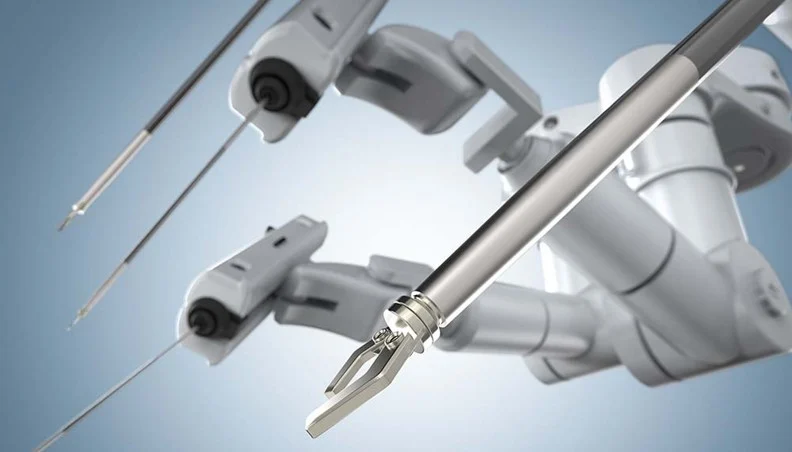
Robotic-assist and single-operator system
Platforms that reduce the procedural complexity of deep enteroscopy and complex biliary intervention, extending access to techniques that previously required specialist multi-operator teams
Singapore’s Position in AMT Endoscopy
Singapore occupies a notable position within the AMT endoscopy landscape across Asia Pacific. Its tertiary healthcare institutions perform complex therapeutic endoscopic procedures at high volumes, supported by clinical teams with international training and access to current-generation device platforms. The country functions as a regional referral destination for advanced endoscopic intervention, drawing patients from across Southeast Asia who require techniques not widely available in their home health systems.
Singapore’s precision manufacturing sector contributes to this ecosystem at the production level. The single-use accessories, precision-formed metal components, and polymer device sub-assemblies used in advanced endoscopic procedures are produced in cleanroom environments certified to ISO 13485, supplying both regional healthcare providers and global device developers. The intersection of clinical capability and manufacturing excellence reflects the same developmental logic that has driven Singapore’s broader positioning in the life sciences sector.
Why Innovation Continues
The conditions that drive innovation in advanced minimally invasive therapeutic endoscopy have not diminished. Gastrointestinal cancer rates are rising across ageing Asian populations. The preference for endoscopic over surgical management is strengthening as long-term outcome data accumulates. Health system economics favour outpatient endoscopic intervention over inpatient surgery wherever the clinical results are equivalent.
Each of those pressures acts on device development in the same way that selective pressure acts on biological adaptation: by favouring capabilities that address the challenge most effectively. The platforms that combine superior imaging, broader anatomical reach, and more precise therapeutic delivery will continue to displace those that offer less. For clinicians, health systems, and manufacturers engaged with this field, understanding that trajectory is the foundation of intelligent participation in the continued development of amt endoscopy.