

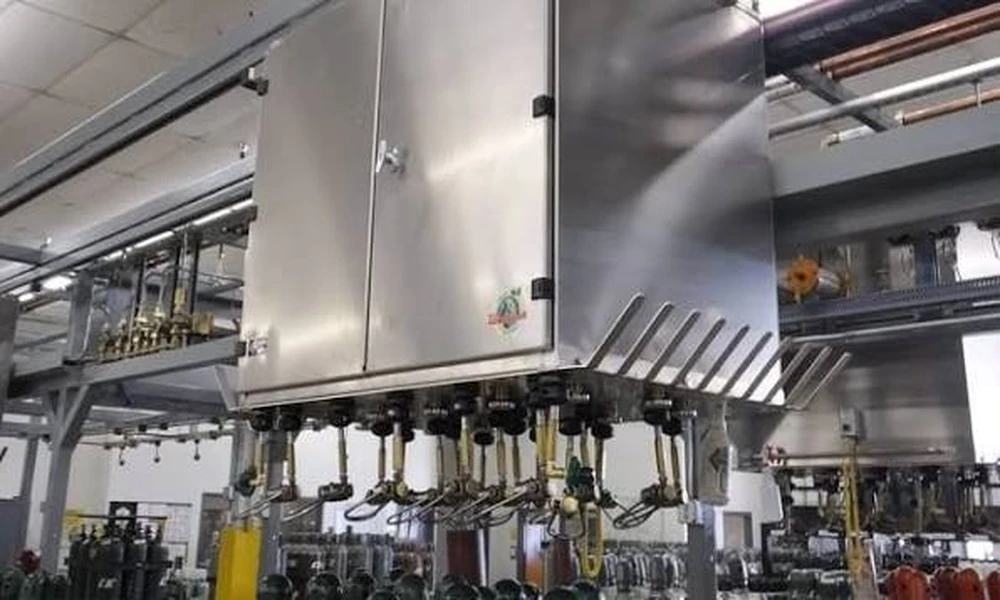
It is tempting to think of filling and palletising as two separate jobs handled by two separate machines, connected only by a conveyor in between. In high-volume operations that separation often creates more problems than it solves, since a filler tuned to its own output rate rarely matches the rhythm the palletiser needs to build a stable load. pallet filling systems are designed around that whole sequence, not just the moment product enters the container.
Where the Filler-to-Pallet Handoff Breaks Down
A filler running slightly faster or slower than the palletiser downstream creates either a queue of finished containers waiting to be stacked or gaps that leave the palletiser idle. Over a full shift, that mismatch compounds into lost hours that never show up as a single obvious fault, just a steady drip of underperformance across the line. Plant managers reviewing end-of-shift totals often struggle to pin the shortfall on any one station, since each individually appears to be running within its rated speed.
What Sets a Pallet-Oriented Filling System Apart
Rather than treating output rate as the only design target, a pallet-oriented system paces filling to match layer counts and pallet patterns, so containers arrive at the palletiser in the groupings it actually needs. This coordination is usually handled through shared line controls rather than left to chance or manual adjustment. The filler effectively runs to the palletiser’s rhythm rather than the other way around, which is a subtle but important shift in how the line is specified from the outset.
Consistency Across an Entire Pallet Load
Fill-weight drift is common on long runs as seals wear or product viscosity shifts with temperature, and it matters more than usual when an entire pallet is destined for one customer or one retail order. Systems built for bulk production include in-line checks that catch drift early, rather than relying on a spot check taken once an hour. A single pallet shipped with several underweight containers can trigger a customer complaint that a spot-check regime would never have caught in time.
Reducing Bottlenecks Across the Full Line
Because the filling stage is deliberately synchronised with what comes after it, operators spend less time firefighting queues and gaps and more time monitoring for genuine faults. This matters most in facilities running multiple SKUs through the same line, where every changeover is an opportunity for the pacing between stations to drift out of alignment again. Once that synchronisation is built into the line controls rather than managed manually, changeovers stop being a recurring source of downtime.
Handling Multiple Container Formats on One Line
Bulk producers rarely run a single container size indefinitely, so the filling stage needs to adjust its pacing and fill volume without a full mechanical changeover each time. A bulk filling system built for high-volume production handles this through recipe-based settings that recall the correct parameters for each format at the press of a button.
Labour and Safety Considerations at Scale
Manually managing the flow between a filler and a palletiser at high volume usually means stationing a worker at the handoff point to clear jams and even out spacing, a repetitive task with real injury risk over a full shift. Automating that coordination removes the need for constant manual intervention at exactly the point where fatigue-related mistakes are most likely. Removing a worker from that specific handoff also frees them for tasks that add more value elsewhere on the line, such as quality inspection or exception handling.
Data and Traceability Benefits
Line controls that manage the filler-to-palletiser handoff typically log fill weights, batch codes and timestamps automatically as containers pass through, producing a traceability record with far less manual paperwork. For operations supplying food, chemical or pharmaceutical customers, this record often becomes essential rather than optional during an audit. Having that data captured automatically also makes it far easier to trace a specific pallet back to its exact production window if a quality issue is ever raised.
Measuring Return on a Bulk Filling Upgrade
The clearest way to judge value is to track pallets completed per shift before and after synchronising the line, alongside the rate of underweight or overweight rejects. Facilities that make this comparison usually find the gains concentrated less in raw filling speed and more in the reduction of idle time between stations.
Planning a Line Around Bulk Output
New lines are easier to design around pallet output from the outset, but existing lines can often be retrofitted by adjusting how the filler communicates with downstream equipment rather than replacing everything. Either way, the pallet, not the individual container, should be treated as the real unit of production when the line is specified.
Getting the Most From a Bulk Production Setup
Before investing, map the full sequence from empty container to finished pallet and identify where pacing currently breaks down, rather than assuming more filling speed alone will solve the problem. Involve whoever operates the palletiser in specifying the filler, since their view of the bottleneck is often more accurate than a spec sheet comparison. A well-matched pallet filling setup pays for itself through fewer stoppages long before it shows up in the headline output figure.